
Saince (pronounced Science) is a leading clinical documentation solutions and services provider that has been identified as one of the fastest growing companies in the country.

Contact Us
Address 5490 McGinnis Village Place, Suite 116, Alpharetta, GA 30005.
Follow Us
Contact Us
Address 5490 McGinnis Village Place, Suite 116, Alpharetta, GA 30005.
Follow Us

5490 McGinnis Village Place, Suite 116, Alpharetta, GA 30005.

Latest News from Saince AI.

February 12, 2026

How Modern PACS Reduces Radiology Turnaround Time and Elevates Diagnostic Accuracy

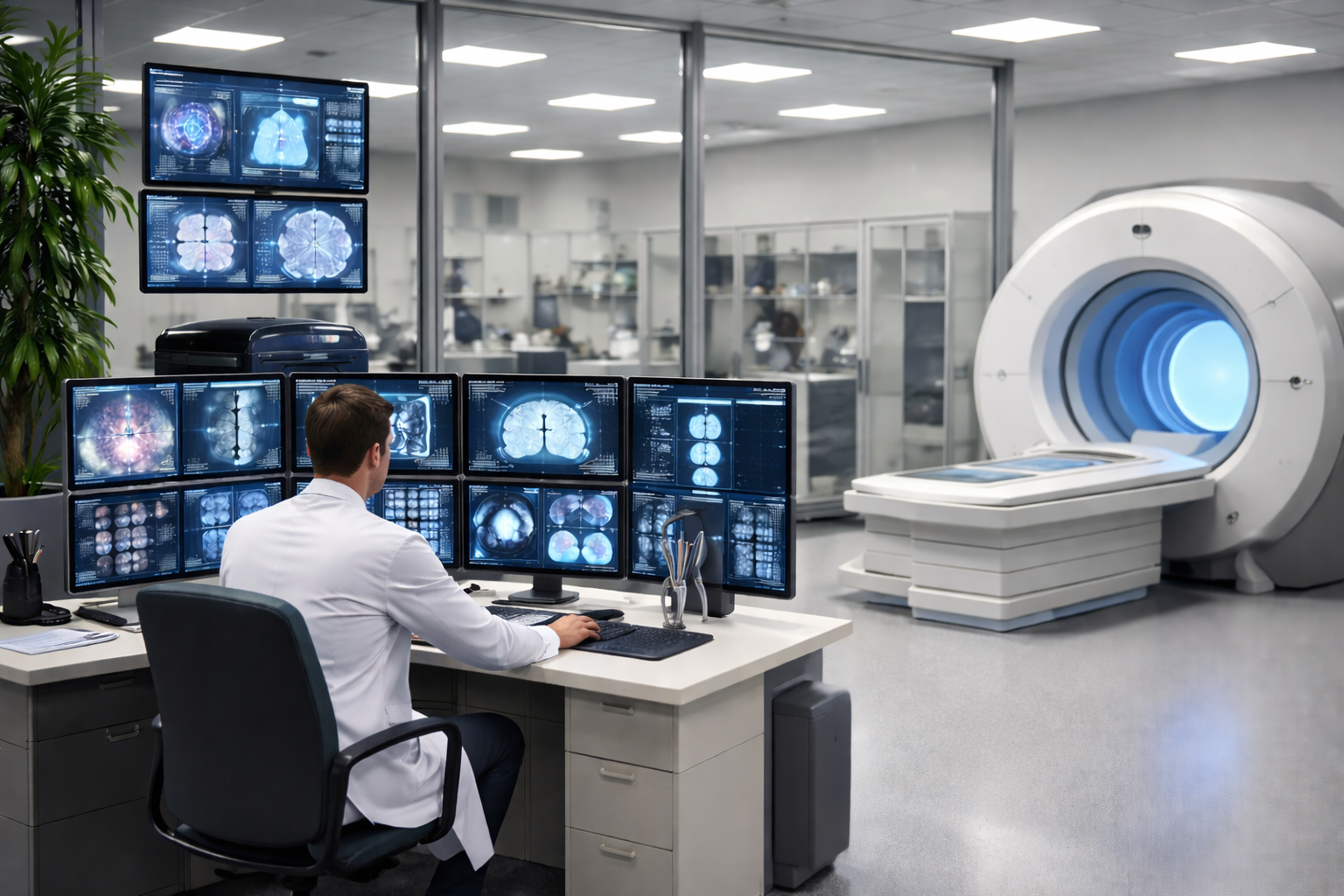
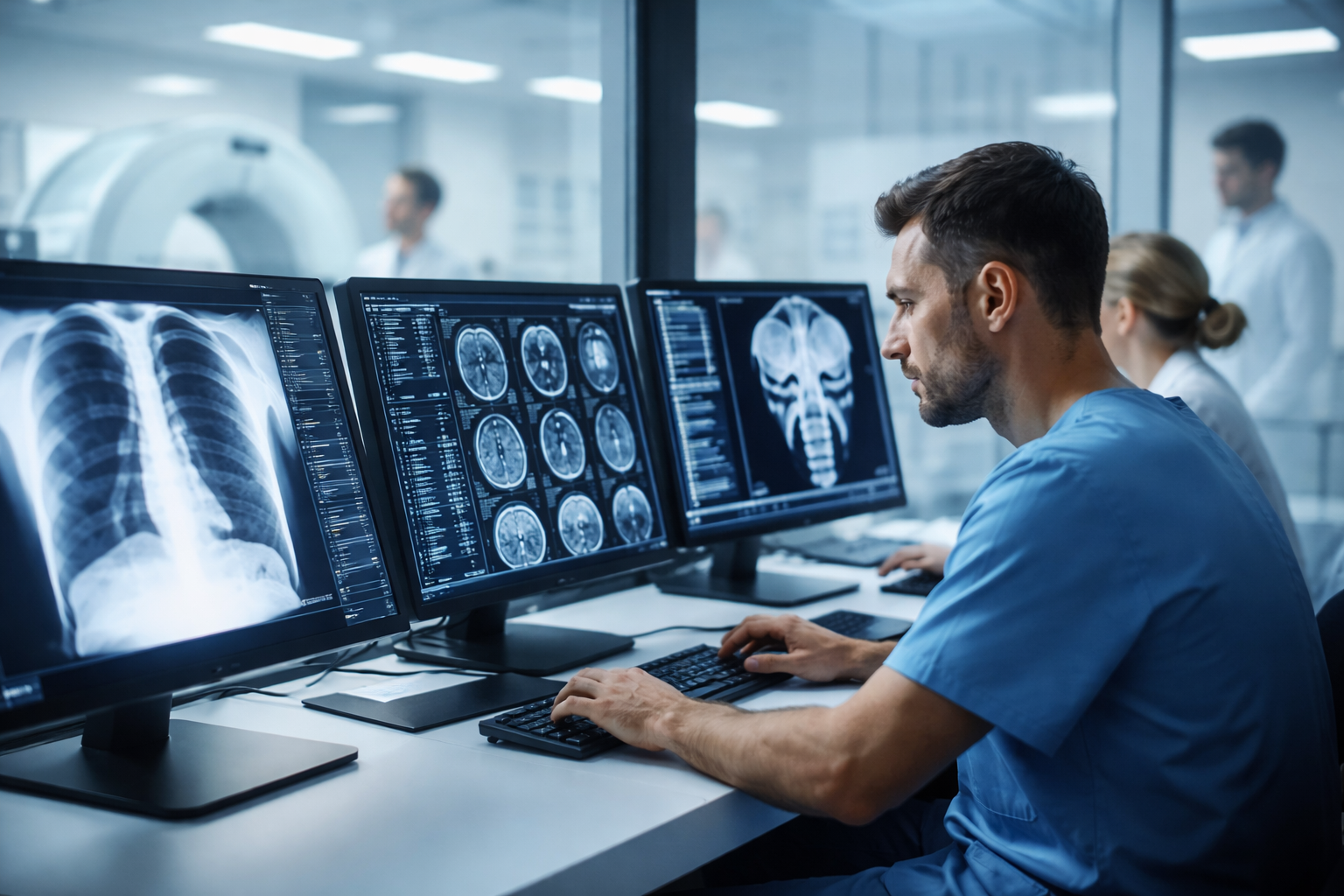
In today’s outcome-driven healthcare environment, time is still brain — but now intelligence is accuracy.
Radiology workflows no longer depend solely on image availability; they depend on how fast insights are generated and acted upon.

Modern PACS has evolved far beyond image storage. Powered by AI, cloud infrastructure, and deep system integration, today’s PACS actively accelerates reporting, reduces cognitive load, and improves diagnostic confidence.

Let’s break down how next-generation PACS delivers speed and precision.


1. Faster Turnaround Time Through Intelligent Workflow Automation

Traditional PACS removed films. Modern PACS removes friction.

AI-Driven Case Prioritization

Instead of static worklists, AI algorithms now:

  • Auto-flag critical findings (stroke, hemorrhage, pneumothorax)
  • Push urgent studies to the top of the radiologist’s queue
  • Reduce time-to-first-read in emergency settings

This ensures that life-threatening cases are never buried in routine exams.

Zero-Latency Image Access (Cloud + Edge)

Cloud-enabled PACS allows:

  • Instant access from anywhere (hospital, home, mobile)
  • No delays caused by local server bottlenecks
  • Faster load times even for large CT/MRI datasets

Radiologists can read studies the moment acquisition completes.

Smart Integration with RIS, HIS, and EMR

Modern PACS uses bi-directional integration to:

  • Auto-populate patient history and clinical notes
  • Eliminate duplicate data entry
  • Trigger automated reporting workflows

The result: minutes shaved off every case — hours saved per day.


2. Diagnostic Accuracy Powered by AI and Advanced Visualization

Speed only matters when accuracy keeps pace. Today’s PACS doesn’t just display images — it assists interpretation.

AI-Assisted Detection and Quantification

AI tools embedded within PACS can:

  • Detect subtle lesions that the human eye may miss
  • Quantify tumor volume, lung nodules, or bone density
  • Track disease progression objectively over time

Radiologists remain in control — AI acts as a second reader, not a replacement.

Advanced Image Processing Beyond Film Capabilities

Modern PACS enables:

  • Adaptive windowing and contrast presets
  • Automated measurements and annotations
  • 3D, MPR, and volumetric reconstructions

These tools significantly improve interpretation of:

  • Complex fractures
  • Neuro and vascular studies
  • Oncology imaging

3. Longitudinal Intelligence: Seeing Change, Not Just Images

Diagnostic accuracy often lies in trend analysis, not a single scan.

Intelligent Prior Study Comparison

Modern PACS:

  • Automatically pulls relevant historical studies
  • Aligns images spatially and temporally
  • Highlights measurable changes over time

This is critical for:

  • Oncology follow-ups
  • Chronic disease monitoring
  • Post-operative assessment

Radiologists move from “Is this new?” to “How fast is this changing?”


4. Collaborative Diagnostics and AI-Enabled Teleradiology

Radiology is no longer confined to one reading room.

Real-Time Collaboration

Modern PACS allows:

  • Simultaneous viewing by multiple clinicians
  • Live annotations and discussion
  • Faster consensus on complex cases

AI-Enhanced Teleradiology

With AI pre-screening:

  • Routine studies can be filtered
  • Specialists focus on complex cases
  • Rural and underserved centers gain access to subspecialty expertise

This ensures diagnostic equity without compromising quality.


5. Reducing Human Error Through Intelligent Data Governance

Human error often originates outside image interpretation.

Modern PACS minimizes this risk by:

  • Enforcing DICOM and HL7 standards
  • Automating patient-image matching
  • Maintaining immutable audit trails

AI further assists by:

  • Detecting protocol mismatches
  • Flagging incomplete studies
  • Reducing reporting inconsistencies

Less administrative noise = more diagnostic focus.


The Bottom Line: PACS Has Become a Clinical Intelligence Platform

Today’s PACS is no longer just about speed or storage.
It is about decision support, accuracy at scale, and sustainable radiology operations.

By combining:

  • AI-driven prioritization
  • Cloud-based accessibility
  • Advanced visualization
  • Collaborative intelligence

Modern PACS helps healthcare organizations:

  • Reduce turnaround times dramatically
  • Improve diagnostic confidence
  • Deliver better outcomes with fewer errors

This isn’t an upgrade — it’s a transformation of radiology itself.

Read More
January 22, 2026

Key HMS Modules Every Growing Hospital Must Have

A growing hospital doesn’t fail because it lacks doctors or beds—it fails when complexity outpaces coordination.

At 50 patients a day, spreadsheets, paper files, and informal processes might still work. At 200 patients a day, those same tools quietly become the source of delays, billing leakages, clinician burnout, and poor patient experience. This is where a Hospital Management System (HMS) stops being “software” and starts becoming infrastructure.

The problem with many HMS articles is that they simply list modules. Hospitals don’t buy modules—they solve operational pain points. So instead of a checklist, let’s look at how each HMS module supports real hospital growth, step by step.


1. From Long Queues to Smooth First Impressions

Patient Registration & Appointment Management

The patient journey begins long before a doctor consultation. As volume increases, even small inefficiencies at the front desk multiply.

Without a structured registration and appointment system, duplicate patient records creep in, waiting areas overflow, and staff spends more time correcting data than helping patients.

A strong HMS creates a single source of truth for patient identity and schedules. Online bookings reduce footfall pressure, automated reminders cut no-shows, and doctor-wise calendars prevent overbooking. The result is faster check-ins and a noticeably calmer reception area.


2. Scaling Care Without Losing Clinical Memory

Electronic Medical Records (EMR)

Growth tests continuity of care. When records are scattered across files, departments, or systems, clinicians lose critical context.

An EMR doesn’t just digitize files—it preserves complete treatment history across visits, enables faster and safer clinical decisions, and protects hospitals during audits and medico-legal reviews.

Structured clinical notes, allergy alerts, and role-based access ensure the right clinician sees the right data at the right time—even as patient volume grows.


3. Protecting Doctor Time as Patient Load Increases

Doctor & Clinical Workflow Management

Doctors are not short on skill—they are short on time.

As hospitals scale, clinicians often get buried under manual documentation, disconnected OPD/IPD workflows, and prescription or order-entry delays.

An HMS that supports clinical workflows allows doctors to focus on medicine, not mechanics. Templates, e-prescriptions, and real-time workflow tracking reduce cognitive load and improve throughput without compromising quality of care.


4. Growth Without Revenue Leakages

Billing, Insurance & Revenue Cycle Management

Many hospitals grow in size but not in profitability because billing complexity increases faster than manual controls can handle.

An integrated billing and revenue cycle module automates OPD/IPD billing, aligns services, packages, and insurance rules, and speeds up approvals and settlements. This creates financial predictability, which is essential for expansion, hiring, and infrastructure investment.


5. Medicines: Where Care Quality Meets Cost Control

Pharmacy Management

In a growing hospital, pharmacy inefficiencies show up quickly as stock-outs during emergencies, expired inventory losses, and dispensing errors.

A connected pharmacy module links prescriptions directly to inventory, tracks batches and expiries, and supports barcode-based dispensing. This improves patient safety while keeping medication costs under control.


6. Faster Diagnoses, Better Outcomes

Laboratory & Diagnostic Management

Diagnostics influence a majority of clinical decisions. Delays or errors in this area ripple across the entire hospital.

An HMS-integrated lab module tracks samples end to end, automates reporting, and pushes results directly into EMRs. Doctors get timely insights, patients get quicker answers, and labs operate with measurable efficiency instead of manual coordination.


7. Turning Beds Into Managed Resources

Inpatient (IPD) & Ward Management

As bed capacity increases, visibility often decreases.

Without structured IPD management, beds remain blocked after discharge, admissions get delayed, and nursing tasks become reactive.

A ward management module brings clarity through real-time bed status, nursing workflows, and discharge planning, helping hospitals use existing capacity more effectively before investing in expansion.


8. Controlling the Invisible Costs

Inventory & Asset Management

Consumables, implants, equipment, and assets quietly drain budgets when unmanaged.

A centralized inventory and asset module tracks usage patterns, prevents emergency shortages, and improves vendor and purchase planning. For leadership, this translates into cost control without compromising availability.


9. From Gut Decisions to Data-Driven Growth

Reports, Analytics & Dashboards

Growth without visibility is risk.

An HMS should convert operational data into clinical performance insights, financial trends, and department-wise bottleneck analysis. Dashboards empower management to act early—before small inefficiencies turn into systemic problems.


10. Scaling Responsibly

Security, Compliance & User Access Control

With growth comes accountability.

Patient data volumes rise, staff roles multiply, and regulatory exposure increases. A robust HMS enforces role-based access, audit trails, secure backups, and encryption—ensuring trust among patients, clinicians, and regulators.


Final Thoughts: HMS Is About Sustainable Growth

A growing hospital doesn’t need more software. It needs alignment between clinical care, operations, finance, and compliance.

The right HMS grows with the hospital, connects departments instead of siloing them, and improves experience for both patients and staff. When evaluated through real-world impact rather than feature checklists, HMS modules become strategic enablers of sustainable, patient-centric growth.

Read More
January 16, 2026

PACS in 2026: From Image Storage to the Intelligence Layer of Radiology

Introduction: Why “Basic PACS” Is No Longer Enough

By 2026, radiology is no longer measured only by how fast images are captured or reports are delivered. The real differentiator is how intelligently imaging data is used across the clinical continuum.

Most hospitals already “have a PACS.” But many are running systems designed for a different era—when storage was the primary goal. Today, imaging volumes are exploding, subspecialty reporting is fragmented, AI tools are entering daily workflows, and clinicians expect instant, contextual access to images from anywhere.

Modern PACS is no longer just infrastructure. It has become the operational and intelligence backbone of radiology.


PACS Redefined: What It Really Means in 2026

In 2026, PACS is best understood as a clinical imaging platform, not a repository. Its role now includes:

  • Orchestrating imaging workflows end to end
  • Enabling distributed and subspecialty reporting
  • Acting as the integration hub for AI, RIS, HIS, and EMR
  • Delivering imaging intelligence at the point of care

A PACS that only stores DICOM images is functionally obsolete.


Key Industry Shifts Shaping PACS in 2026

1. Imaging Volume Growth Without Proportional Staff Growth

Radiology departments are handling 30–50% higher study volumes compared to a few years ago, while radiologist availability has not scaled at the same rate.

Modern PACS addresses this imbalance by:

  • Intelligent worklist prioritization
  • Automated study routing by modality, urgency, or subspecialty
  • Load balancing across sites and radiologists

Efficiency is no longer optional—it is existential.


2. PACS as the Foundation for Teleradiology and Distributed Care

Hybrid and fully remote radiology models are now standard. PACS must natively support:

  • Zero-footprint web viewers with diagnostic fidelity
  • Secure access across geographies and time zones
  • Consistent performance regardless of location

Departments relying on VPN-heavy or workstation-bound PACS struggle with latency, downtime, and clinician frustration.


3. Cloud-Native PACS Is Becoming the Default Architecture

The conversation has shifted from “Should we move to the cloud?” to “Why are we still maintaining on-prem PACS?”

Cloud-native PACS enables:

  • Elastic scaling during peak workloads
  • Built-in disaster recovery and high availability
  • Faster deployment of updates and new features
  • Lower long-term total cost of ownership

Importantly, leading institutions are adopting hybrid models, keeping latency-sensitive functions local while leveraging the cloud for storage, analytics, and collaboration.


4. PACS + AI: From Pilot Projects to Daily Practice

AI in radiology has moved beyond experimentation. In 2026, PACS is the delivery mechanism for AI, not a separate system.

Advanced PACS platforms now:

  • Embed AI results directly into the viewer
  • Automatically flag critical findings
  • Compare current studies with priors using algorithms
  • Reduce cognitive load for radiologists

Without PACS-level AI integration, even the best algorithms fail to create clinical impact.


5. Interoperability Is a Clinical Requirement, Not an IT Feature

Radiologists and clinicians expect imaging to be:

  • Instantly accessible within EMR workflows
  • Contextualized with reports, labs, and clinical history
  • Shareable across departments and external partners

Modern PACS prioritizes:

  • Standards-based interoperability (DICOM, HL7, FHIR)
  • Vendor-neutral strategies to avoid data silos
  • Seamless RIS, HIS, and EMR integration

Disconnected systems are now a direct threat to patient safety and clinician adoption.


6. Data Governance, Security, and Trust

As imaging data becomes more accessible, governance becomes more critical. PACS in 2026 must support:

  • Granular role-based access
  • Comprehensive audit trails
  • Encryption at rest and in transit
  • Compliance with evolving data protection regulations

Security is no longer just about preventing breaches—it’s about enabling safe access at scale.


7. PACS as a Source of Operational Intelligence

Leading radiology departments now use PACS data to answer strategic questions:

  • Where are reporting bottlenecks occurring?
  • Which modalities are under- or over-utilized?
  • How can turnaround times be reduced without burnout?

Modern PACS platforms provide analytics that turn imaging operations into measurable, optimizable processes.


What Forward-Looking Radiology Departments Expect from PACS

In 2026, decision-makers evaluate PACS based on:

  • Workflow intelligence, not just features
  • Cloud readiness and scalability
  • AI integration roadmap
  • Ease of use for radiologists and clinicians
  • Long-term adaptability, not short-term cost

PACS selection has become a strategic decision, not a procurement exercise.


Final Perspective: PACS as Strategic Infrastructure

PACS is no longer a background system quietly storing images. It is now:

  • A productivity engine for radiologists
  • A collaboration platform for clinicians
  • A launchpad for AI-driven diagnostics
  • A critical pillar of digital healthcare strategy

Radiology departments that modernize their PACS are not merely upgrading technology—they are redefining how imaging contributes to clinical outcomes and organizational resilience.

In 2026, the question is no longer “Do we need PACS?”
It is “Is our PACS capable of supporting where radiology is going next?”

Read More